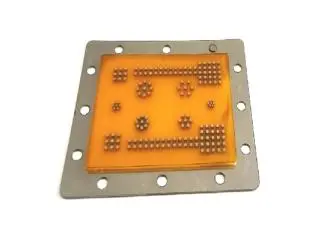
The global semiconductor landscape is undergoing a massive shift driven by the rapid adoption of Artificial Intelligence (AI), high-speed memory architectures, and the transition to wide-bandgap power electronics. As chip designs become more complex, with higher pin counts and smaller footprints, the infrastructure required to test these components must evolve accordingly. Traditional testing interfaces are often pushed to their physical limits by the data rates of DDR5 or the thermal demands of Silicon Carbide (SiC) devices. In this context, Interposer has established itself as a pioneer, providing high-performance Pressure Conductive Rubber (PCR) solutions that address the most demanding validation and production testing requirements of the next generation of silicon.
AI accelerators and Graphics Processing Units (GPUs) are the engines of the modern data center. These chips rely on High-Bandwidth Memory (HBM) to move massive amounts of data at lightning speeds. Testing these integrated systems requires a socket interface that can handle extreme densities and ultra-high frequencies without introducing signal noise.
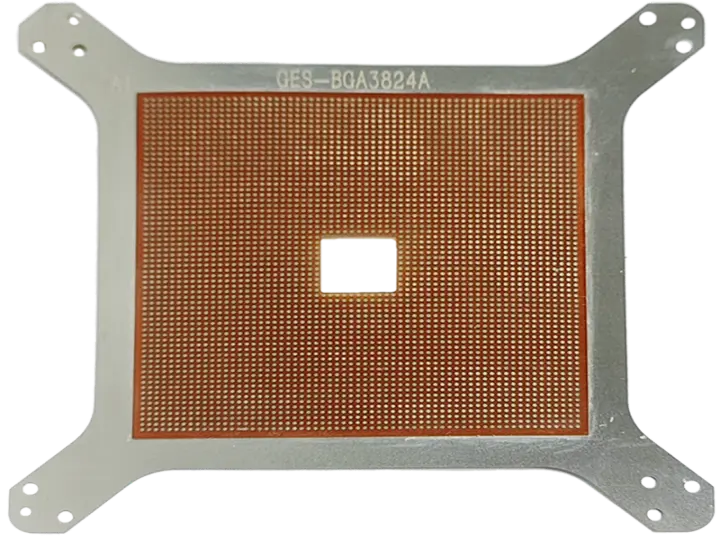
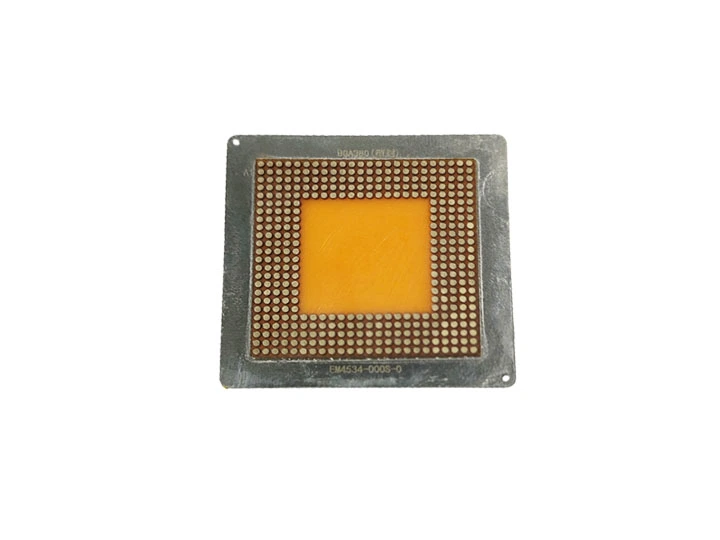
HBM involves stacking multiple DRAM dies vertically, resulting in thousands of microscopic connection points. Traditional spring-probe pins struggle with the fine pitches required for HBM testing, often leading to mechanical instability. Elastomer sockets, utilizing vertically arranged gold-plated wires within a silicone matrix, provide a high-density contact solution that can match the footprint of HBM perfectly, ensuring every connection is secure and electrically sound.
The electrical environment of an AI chip is incredibly noisy. To accurately validate performance, the test socket must have nearly transparent electrical characteristics. Because the signal path in a PCR-based socket is significantly shorter than a traditional pin, it minimizes parasitic inductance. This allows engineers to conduct tests at frequencies exceeding 40GHz with minimal signal reflection, which is critical for the integrity of high-speed data buses used in AI training modules.
The transition from DDR4 to DDR5 has brought a significant increase in data transfer rates, nearly doubling the bandwidth. However, this increase in speed comes with a much tighter margin for error in signal timing and voltage levels.
As memory speeds increase, the length of the testing probe becomes a major liability. A standard pogo pin acts as a tiny antenna, picking up electromagnetic interference and causing crosstalk between adjacent signal lines. DDR5 requires a low-profile interface to keep the signal path as short as possible. The elastomer technology provided by Interposer offers a solution where the contact height can be as low as 0.05mm, virtually eliminating the “antenna effect” and allowing for clean eye diagrams during high-speed memory characterization.
DDR5 modules operate at higher performance levels which inevitably generate more heat during extended burn-in tests. The silicone used in PCR sockets is naturally resilient to thermal stress. It maintains its elastic properties across a wide temperature range, ensuring that the contact resistance remains stable even as the memory module reaches its peak operating temperature during stress testing.
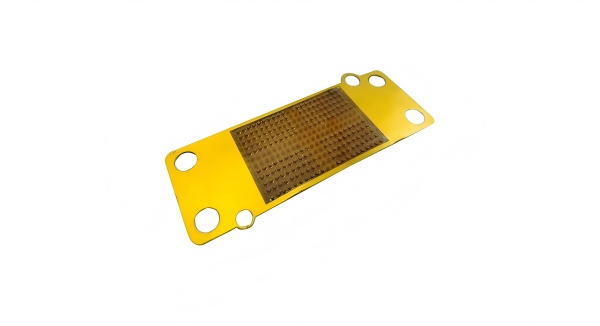
Beyond the world of high-speed computing, the power electronics industry is being revolutionized by Silicon Carbide (SiC) and Gallium Nitride (GaN). These materials allow for faster switching and higher efficiency in electric vehicles (EVs) and renewable energy systems.
SiC chips are designed to operate at much higher voltages and temperatures than traditional silicon. During the testing phase, the socket must withstand significant thermal cycling without degrading. PCR sockets are engineered for these harsh environments. The gold-plated conductive elements are embedded in a high-temp silicone that can handle continuous exposure to 150°C, providing a reliable interface for long-duration reliability testing in the automotive sector.
In power testing, any resistance in the test socket results in a voltage drop and localized heating. The vertically arranged gold-plated wires in a PCR socket provide a highly conductive path with extremely low contact resistance. This ensures that the power measurements taken during the test are an accurate reflection of the chip’s performance, not the limitations of the testing hardware.
To understand why elastomer technology is becoming the standard for high-end chip testing, it is helpful to look at the technical parameters required for different chip architectures.
| Application | Key Requirement | Preferred Interface | Frequency/Thermal Limit |
|---|---|---|---|
| AI / GPU | High Pin Count & High Speed | Fine-Pitch PCR | 40GHz - 100GHz |
| DDR5 / LPDDR5 | Low Inductance | Low-Profile Elastomer | 6.4 Gbps+ Data Rates |
| SiC / GaN Power | Thermal Stability | High-Temp PCR | -55°C to +150°C |
| 5G RF Modules | Low Insertion Loss | Gold-Plated Wire PCR | 28GHz - 39GHz (mmWave) |
One of the most overlooked challenges in testing large AI and server chips is “package warpage.” As these chips grow in physical size, they tend to bow or warp slightly during the manufacturing process. When using a rigid testing interface, a warped chip may result in some pins not making contact at all, leading to false failures. The inherent elasticity of the rubber material allows the socket to conform to the unique topography of each chip. By providing uniform Z-axis compliance, the elastomer ensures that even if the chip is not perfectly flat, every single solder ball makes a consistent electrical connection. This flexibility is a primary reason why Interposer is the preferred choice for manufacturers dealing with large-scale BGA and LGA packages where mechanical precision is difficult to maintain.
The semiconductor industry is no longer just about making chips smaller; it is about making them faster, more efficient, and more reliable under extreme conditions. Whether it is the rapid-fire data requirements of an AI processor, the high-speed synchronization of DDR5 memory, or the rugged power demands of a SiC inverter, the testing interface is the unsung hero of the production line. Choosing a testing solution that offers high frequency support, thermal resilience, and mechanical flexibility is essential for maximizing yield and reducing the total cost of ownership. By leveraging the advanced material science of Interposer, chip manufacturers can ensure that their most innovative designs are validated with the highest degree of accuracy and reliability.
Low inductance is critical because it reduces signal distortion and crosstalk. At DDR5 speeds, even a few nanohenries of inductance from a long testing pin can cause enough timing jitter to fail a perfectly good chip. PCR sockets provide the shortest possible path to minimize this risk.
PCR technology doesn’t rely on individual mechanical springs. Instead, it uses a dense array of vertically aligned conductive wires. This allows for thousands of contacts to be placed in a very small area, supporting the high-density BGA patterns found in modern GPUs and AI chips.
Yes. The silicone matrix used in PCR sockets has excellent dielectric strength, providing high insulation between adjacent conductive paths. This allows the socket to handle the high voltages associated with SiC and GaN testing without the risk of arcing or short circuits.
Absolutely. Unlike metal pogo pins that can scratch or deform solder balls, the elastomer is compliant. This prevents physical damage to the DUT (Device Under Test), reducing the number of chips rejected for mechanical defects after the testing process is complete.
Gold is highly resistant to oxidation and provides excellent electrical conductivity. By using gold-plated wires, the socket maintains a very low and stable contact resistance over thousands of test cycles, which is vital for accurate power and signal measurements.