The modern landscape of high-speed electronics demands more than just connectivity; it requires precision engineering at the microscopic level. As data rates climb and package sizes shrink, the physical interface between components has become a primary design consideration. For many Tier-1 technology companies, the transition from traditional rigid connectors to flexible, high-performance solutions is no longer optional. Interposer has been at the forefront of this evolution, developing advanced Pressure Conductive Rubber (PCR) technologies that serve as the backbone for next-generation hardware architectures.
In the world of B2B procurement and hardware engineering, terminology often overlaps, leading to confusion during the specification phase. Understanding the subtle differences between various industry terms is the first step toward a successful integration.
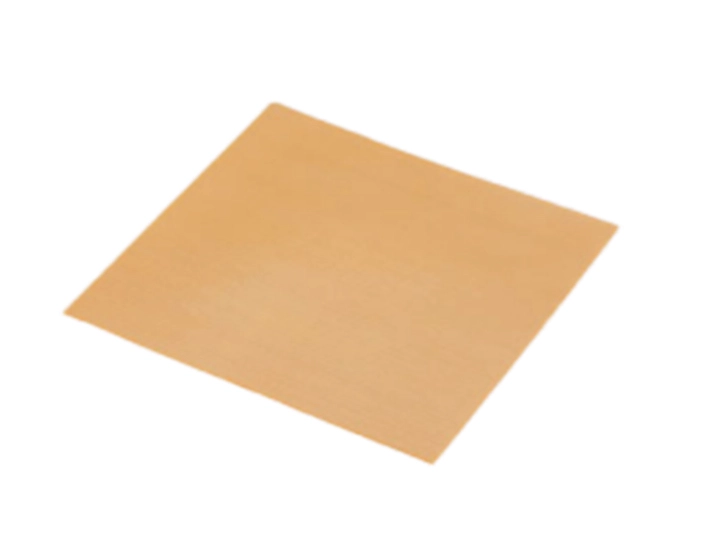
While many engineers use these terms interchangeably, a “connector” typically refers to a complete assembly including housing, while an “interposer” often refers to the core conductive layer itself. Specifically, a conductive interposer is a sophisticated material interface designed to be sandwiched between two mating surfaces—such as an IC package and a PCB—to provide a vertical electrical path. It is the heart of the connection, responsible for signal integrity and mechanical compliance.
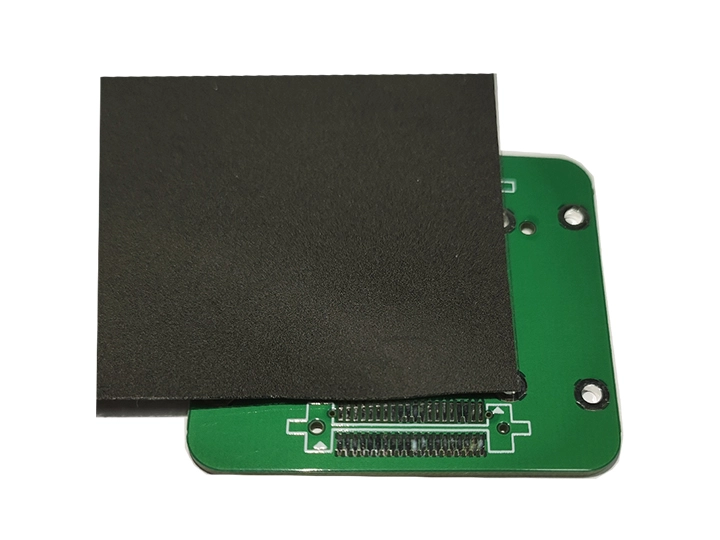
For procurement teams, identifying the right category is essential. Whether a project calls for an elastomeric connector or a specialized elastomeric interposer, the distinction usually lies in the application’s complexity. An interposer is often the preferred term when discussing high-frequency RF or fine-pitch BGA testing, whereas “interconnector” is more prevalent in board-to-board or FPC-to-PCB industrial applications.
When selecting a solution from specialized PCB connector manufacturers, the focus must shift from general descriptions to specific engineering parameters. The success of a PCR connection depends on balancing electrical performance with mechanical limits.
The primary electrical metric for any conductive interposer is its contact resistance. Typically ranging from 20mΩ to 50mΩ, this value must remain stable across thousands of cycles. Furthermore, engineers must consider the current carrying capacity per conductive wire. While PCR is famous for high-speed signals, it can also handle power delivery if the wire density is correctly specified to prevent localized heating.
Mechanical design is where many projects succeed or fail. PCR materials require a specific range of compression to ensure all vertically aligned gold-plated wires make contact. Designing a system that applies enough pressure to ensure conductivity—but not so much that it causes permanent deformation of the silicone matrix—is a critical engineering task.
A high-performance interposer is only as good as the housing that holds it. Unlike soldered connections, elastomeric solutions require a robust mechanical environment to maintain long-term reliability.
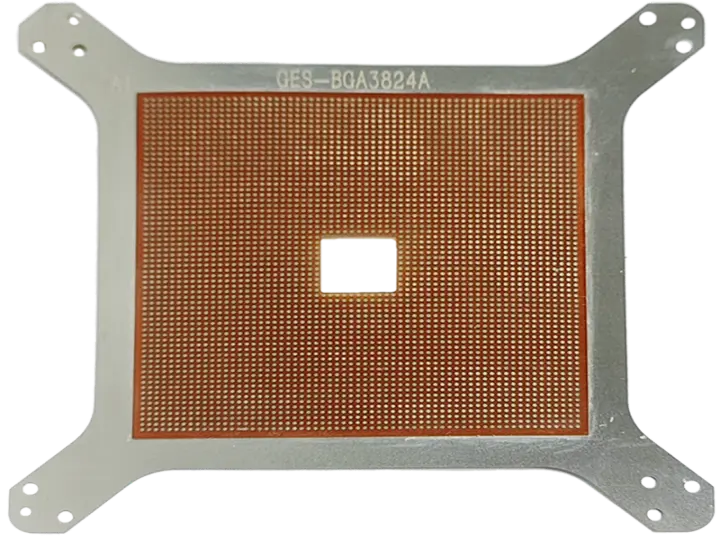
The housing must be designed to provide uniform pressure across the entire surface. This is especially challenging for “Big Package” applications. Precision clamping mechanisms ensure that the Z-axis pressure is evenly distributed, preventing “open” connections at the corners of the chip.
One of the greatest engineering advantages of an elastomeric solution is its ability to compensate for “package warpage.” In large CPUs or GPUs, the substrate is rarely perfectly flat. A rigid connector cannot adapt to these microscopic hills and valleys, but the silicone base of a PCR interposer acts as a compliant cushion, absorbing variations in coplanarity.
For B2B applications in aerospace and automotive sectors, longevity is non-negotiable. The materials used must withstand more than just electrical signals; they must survive the environment. High-grade PCR utilizes specialized silicone formulations that exhibit minimal stress relaxation. This ensures that even after years of being compressed, the interposer maintains enough force to keep the electrical contact secure. Furthermore, the silicone matrix is naturally hydrophobic and resistant to most industrial chemicals, protecting the conductive wires from corrosion.
| Parameter | Fine-Pitch Signal | High-Power/Current | High-Speed RF |
|---|---|---|---|
| Material Thickness | 0.05mm - 0.2mm | 0.5mm - 1.0mm | 0.1mm - 0.3mm |
| Operating Frequency | Up to 40 GHz | < 1 GHz | 40 GHz - 100 GHz |
| Contact Resistance | < 50 mΩ | < 20 mΩ | < 30 mΩ |
| Compression Force | 20g - 40g per pad | 50g - 80g per pad | 15g - 30g per pad |
| Pitch Support | 0.1mm - 0.3mm | > 0.5mm | 0.2mm - 0.4mm |
By integrating material science expertise with advanced manufacturing processes, Interposer delivers connectivity solutions that balance performance, durability, and consistency—meeting the real-world needs of industrial, automotive, and heavy-duty applications. Our commitment goes beyond simply supplying parts; we offer end-to-end technical support including mechanical simulation and custom frame design to ensure that the conductive interposer integrates perfectly into your system-level architecture.
Choosing a partner in the interconnect space is a strategic decision. Working with specialized PCB connector manufacturers who control the entire production process—from silicone compounding to gold-plating—is vital. A specialized partner provides the “design-for-manufacturing” (DFM) insight that prevents costly errors during the prototyping phase. Whether you are dealing with a “Big Package” GPU or a “Fine Pitch” sensor, custom-tailored interposer formulations allow for optimization that off-the-shelf connectors cannot match. As technology continues to push toward 100GHz, the collaboration between hardware designers and specialists will be the key to performance. Interposer remains dedicated to being that partner, providing the material innovation required to bridge the gap between design and reality.
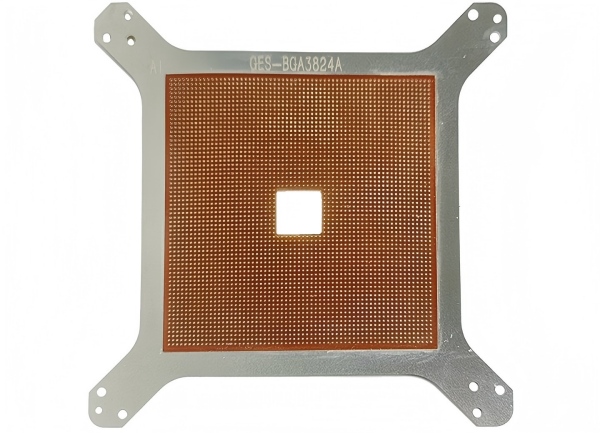
The force is calculated based on the number of contact points and the required deflection. Manufacturers provide a gram-force per pad (e.g., 30g/pad). Multiplying this by the total pin count determines the total clamping force needed for the housing design.
When stored in a cool, dry environment in original ESD-safe packaging, a PCR interposer typically has a shelf life of 2 to 5 years. The gold-plated wires are highly resistant to oxidation, ensuring the material remains ready for assembly.
Yes, high-grade silicone PCR materials are used in aerospace due to low outgassing properties. This makes them suitable for vacuum environments where traditional plastics might release gases that could contaminate sensitive optical or electronic components.
One primary benefit is ease of rework. Because the connection is solderless and based on compression, you can simply unclamp the housing, replace the component, and reassemble the system without heat or specialized desoldering tools.