The semiconductor industry is currently navigating a period of unprecedented transformation. As AI-driven computing, 5G telecommunications, and high-performance data centers push the boundaries of chip design, the requirements for testing these components have become significantly more stringent. Traditional testing methods that sufficed for previous generations are now facing physical and electrical limitations. In this high-stakes environment, Interposer has emerged as a critical partner for engineering teams, providing the advanced Pressure Conductive Rubber (PCR) technology necessary to bridge the gap between complex integrated circuits and testing interfaces.
As the demand for smaller, faster, and more efficient devices grows, integrated circuit (IC) packaging has evolved from simple wire-bonded designs to complex architectures like BGA (Ball Grid Array), LGA (Land Grid Array), and QFN (Quad Flat No-lead). These modern packages allow for thousands of connections within a tiny footprint, but they also present a massive challenge for quality assurance.
The primary challenge in today’s testing environment is the shrinking “pitch”—the distance between the centers of two adjacent solder balls or pins. We are now seeing pitches drop below 0.3mm, making it increasingly difficult for mechanical probes to maintain contact without damaging the device under test (DUT) or suffering from signal interference. Furthermore, with data rates reaching into the gigahertz range, the electrical performance of the contact medium has become the most critical factor in avoiding signal degradation.
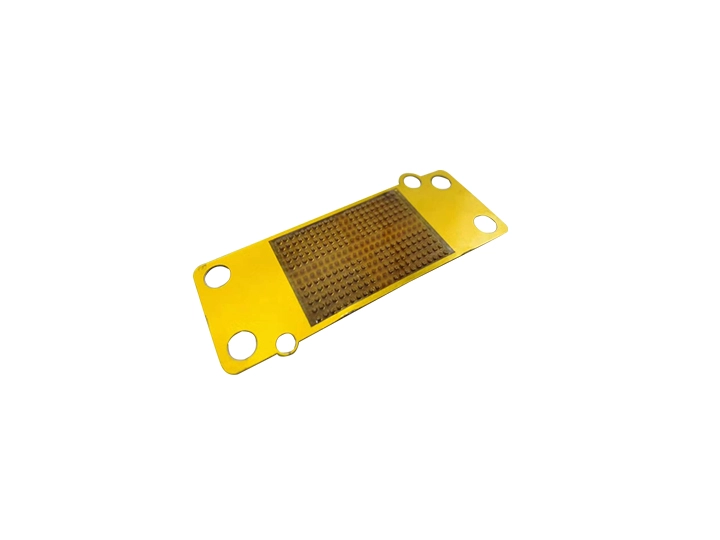
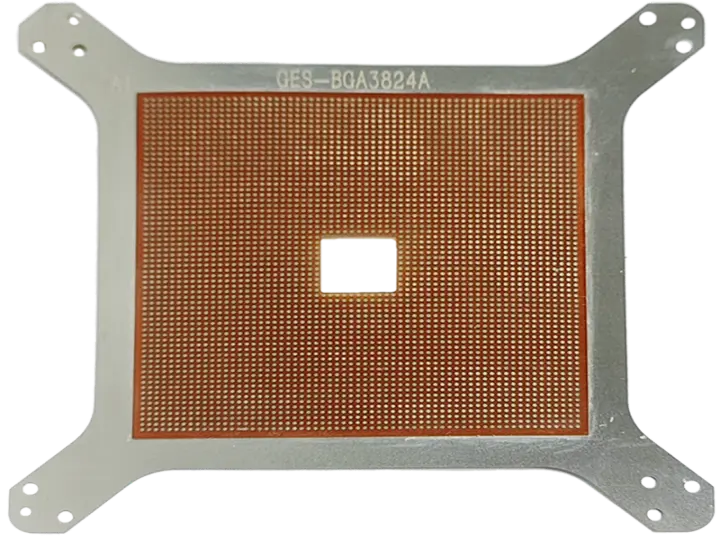
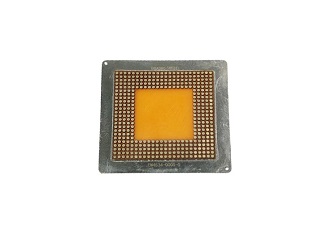
Elastomer test sockets represent a departure from traditional mechanical contact methods. Instead of using spring-loaded pins, these sockets utilize a specialized material known as Pressure Conductive Rubber (PCR). This material consists of a high-grade silicone matrix embedded with vertically aligned conductive particles, typically gold-plated brass or silver.
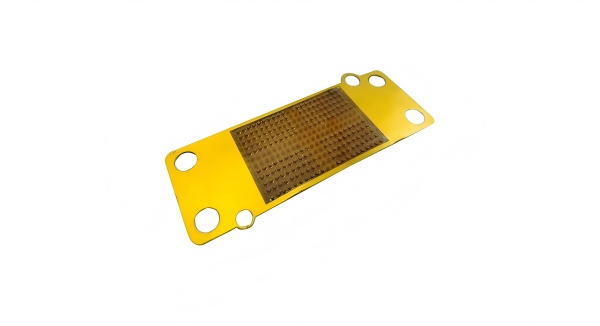
The working principle of PCR is elegantly simple yet technically sophisticated. In its relaxed state, the rubber acts as an insulator. When a vertical load is applied—usually when the IC package is pressed into the socket—the conductive particles come into contact with one another, creating a highly conductive vertical path. This transition allows for an electrical connection that is incredibly short, often less than 1.0mm in length, which is fundamental to maintaining signal integrity at high speeds.
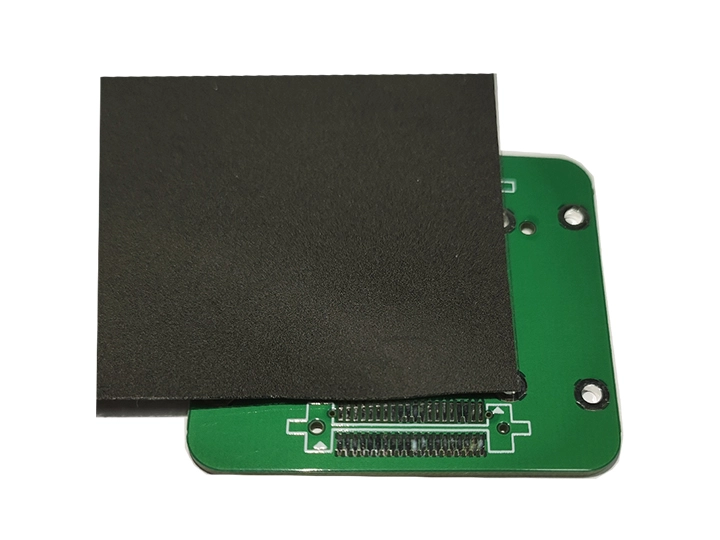
In technical documentation, you may see these products referred to as elastomer films, rubber sockets, or conductive interposers. Regardless of the terminology, the core value proposition remains the same: providing a compliant, low-inductance interface that can adapt to the microscopic coplanarity issues often found in high-pin-count IC packages.
For decades, pogo pins (spring-loaded probes) were the industry standard. However, as frequencies rise, the mechanical nature of the pogo pin becomes its greatest weakness. Below is a comparison of how these two technologies perform in a high-demand testing environment.
| Feature | Pogo Pin (Spring Probe) | Elastomer (PCR) Socket |
|---|---|---|
| Minimum Pitch | Generally limited to >0.35mm | Capable of <0.2mm |
| Signal Path Length | Long (2.0mm - 5.0mm) | Very Short (0.5mm - 1.0mm) |
| Inductance (nH) | Higher (0.5 - 1.5 nH) | Extremely Low (<0.1 nH) |
| Bandwidth (GHz) | 5 GHz - 15 GHz | 40 GHz - 100+ GHz |
| Mechanical Wear | High (Spring fatigue) | Low (Elastic deformation) |
| Maintenance | Frequent pin replacement | Simple cleaning of the film |
The most significant advantage of PCR technology is its electrical performance. Because the signal path is so short, the self-inductance and mutual inductance are minimized. In high-speed digital and RF testing, inductance is the enemy; it causes signal reflection, crosstalk, and ground bounce. By utilizing the solutions developed by Interposer, engineers can achieve bandwidths exceeding 40GHz, which is essential for testing the latest generation of GPU and AI accelerators.
While pogo pins are susceptible to spring fatigue and tip contamination, elastomer materials are inherently resilient. The silicone matrix provides a natural cushioning effect that protects the solder balls of the IC package from deformation. From a maintenance perspective, cleaning an elastomer socket is often as simple as using specialized adhesive tape to remove debris, whereas pogo pins frequently require individual replacement, leading to significant downtime in high-volume manufacturing (HVM).
As the industry moves toward “Micro-BGA” and “Chip-Scale Packaging” (CSP), pogo pins reach a physical limit where the springs become too thin to be reliable. Elastomer sockets do not face this limitation because the conductive paths are formed by microscopic particles within the rubber, allowing for a much higher density of connections without the risk of mechanical failure.
The versatility of elastomer technology allows it to be used across various stages of the semiconductor lifecycle.
Automated Test Equipment (ATE): In high-volume production testing, speed and reliability are paramount. PCR sockets allow for rapid insertion and removal cycles while maintaining stable contact resistance.
Burn-in Testing: During burn-in, chips are subjected to high temperatures and voltages for extended periods to weed out early failures. Elastomer materials are engineered to withstand temperatures ranging from -55°C to +150°C, ensuring consistent performance during thermal cycling.
Final Test (FT): This is the last gate before the chip is shipped to the customer. The low-profile nature of elastomer connectors ensures that the testing environment replicates the real-world application as closely as possible.
The transition to elastomer solutions is driven by the need for accuracy. If a test socket provides a poor electrical connection, a perfectly good chip might be flagged as “fail”—a phenomenon known as “false failure.” False failures significantly reduce yield and increase production costs. By providing a more stable and transparent electrical path, PCR sockets help manufacturers maximize their yield and ensure that only truly defective parts are discarded.
Furthermore, the mechanical compliance of the rubber compensates for small variations in the height of the solder balls on a BGA package. This “z-axis compliance” ensures that every single pin makes a reliable connection, even if the chip is slightly warped or the PCB is not perfectly flat.
Choosing between a traditional probe and an elastomer solution depends on your specific application, budget, and performance requirements. However, for any project involving high frequencies, fine pitches, or high-density layouts, the benefits of PCR are undeniable. As a global leader in the field, Interposer continues to innovate, offering customized elastomer solutions that meet the rigorous demands of the next generation of semiconductor technology. Whether you are validating a new BGA package or setting up a high-volume burn-in line, selecting the right interface is the key to testing success.
Depending on the compression force and the environment, high-quality elastomer sockets can typically handle between 10,000 to 50,000 cycles. With proper cleaning and maintenance of the contact surface, some applications can even exceed these numbers in a stable production environment.
Standard elastomer sockets are designed to operate from -55°C to +150°C. This wide range makes them ideal for both automotive-grade cold testing and high-temperature burn-in testing, where thermal stability is crucial for accurate data.
Cleaning usually involves using a specialized “cleaning sheet” or high-tack adhesive tape to gently remove dust and solder oxides from the surface. In some cases, compressed air or isopropyl alcohol can be used, depending on the specific rubber formulation.
Yes, one of the greatest strengths of this technology is its flexibility. Manufacturers can customize the thickness, conductive particle density, and the outer frame of the socket to accommodate unique package shapes, varying pin counts, and specific electrical requirements.
Yes, excessive compression can lead to permanent deformation of the silicone matrix, reducing its elastic recovery. It is vital to follow the manufacturer’s specifications for “over-travel” and compression force to ensure the maximum possible lifecycle for the socket.