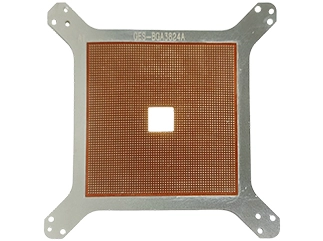
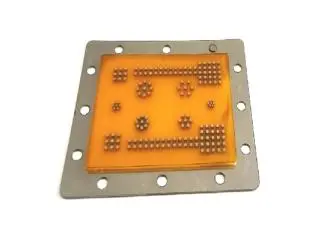
In the rapidly evolving world of electronics manufacturing, the demand for higher density, faster signal speeds, and smaller footprints has never been greater. Traditional mechanical connectors, while reliable for legacy systems, are increasingly becoming the bottleneck in high-performance hardware design. As engineers push the limits of data rates in telecommunications, aerospace, and medical imaging, the need for a more sophisticated interface has led to the widespread adoption of the conductive interposer. At the forefront of this transition is Interposer, a company dedicated to engineering advanced Pressure Conductive Rubber (PCR) solutions that redefine how integrated circuits and printed circuit boards interact.
An elastomer interposer is much more than a simple bridge between two points; it is a precision-engineered component that manages electrical signals, mechanical stress, and space constraints simultaneously. Unlike traditional connectors that rely on bulky metal pins and sockets, these interposers use a thin layer of specialized silicone rubber embedded with vertically aligned conductive elements.
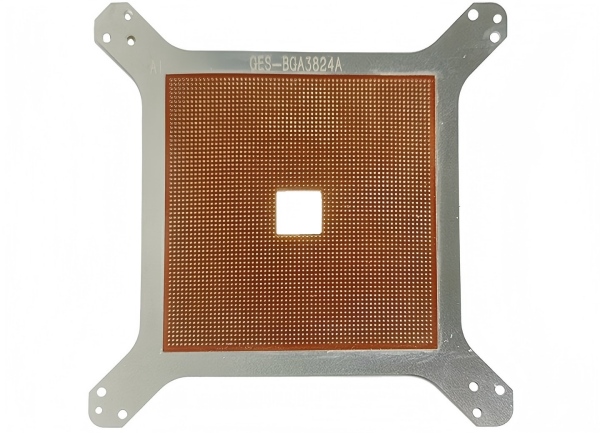
While a traditional connector often involves a male and female pair that “snaps” together, an interposer is typically a “solderless” interface placed between two mating surfaces. This compression-mount approach allows for a significantly lower profile—often less than 1mm in height. This reduction in height is not just about saving space; it fundamentally changes the electrical characteristics of the connection, reducing the signal path to a near-negligible length.
In high-frequency applications, every millimeter of a connector acts as a potential source of signal loss and electromagnetic interference. By utilizing a conductive interposer, designers can maintain impedance control and minimize parasitic inductance. This makes them indispensable for 100Gbps Ethernet switches, advanced radar systems, and high-resolution imaging sensors where signal purity is non-negotiable.
The versatility of PCR technology allows it to solve connectivity challenges across a variety of industrial and commercial platforms.
As devices shrink, the distance between parallel circuit boards—often called the stack height—must also decrease. Elastomer interposers allow for ultra-low-profile board-to-board connections that are far thinner than even the most compact mezzanine connectors. Because the connection is made through compression, it can accommodate hundreds of I/O points in a tiny surface area, which is ideal for handheld devices and compact industrial controllers.
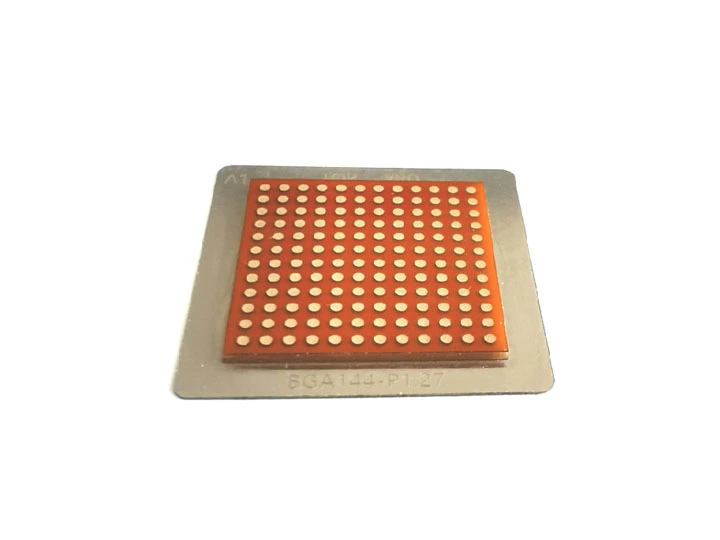
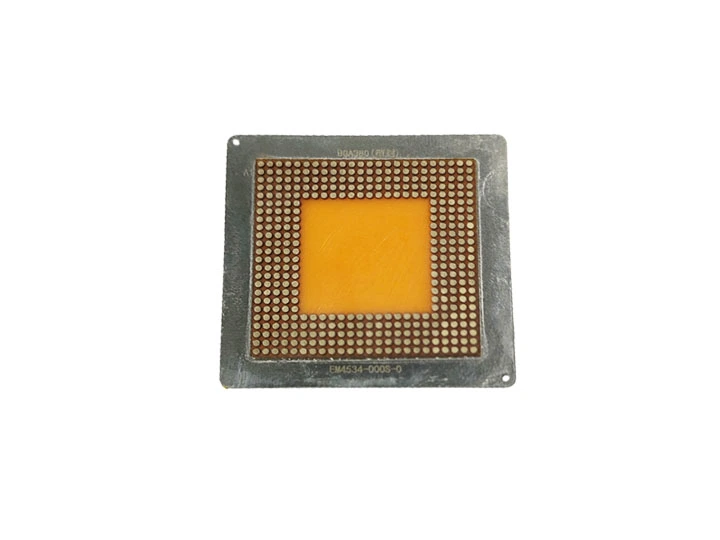
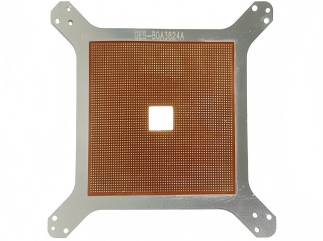
In many high-value applications, soldering a complex BGA or LGA package directly to the board is risky. A conductive interposer provides a reliable, solderless connection that allows the chip to be easily replaced or upgraded. This is particularly valuable in high-end servers and satellite hardware, where the ability to swap out a processor without desoldering can save thousands of dollars in rework costs.
Connecting Flexible Printed Circuits (FPC) to a rigid PCB often requires bulky ZIF connectors. An elastomer solution simplifies this by acting as a compliant interface between the FPC pads and the PCB traces. The elastic nature of the material ensures a uniform connection across all contact points, even if the surfaces are not perfectly flat.
To understand why leading technology firms are moving toward elastomer solutions, one must look at the data. The following table illustrates the performance gap between traditional mechanical interfaces and advanced PCR interposers.
| Performance Metric | Traditional Spring/Pin Connector | PCR Elastomer Interposer |
|---|---|---|
| Connection Height | 2.0mm to 10.0mm | 0.05mm to 1.0mm |
| Minimum Pitch | 0.4mm to 0.8mm | 0.1mm to 0.3mm |
| Self-Inductance | 0.5nH to 2.0nH | < 0.1nH |
| Operating Frequency | Up to 10 GHz | Up to 100 GHz |
| Contact Resistance | 30 - 100 mΩ | 10 - 50 mΩ |
| Mechanical Life | Limited by spring fatigue | High resilience silicone |
By integrating material science expertise with advanced manufacturing processes, Interposer delivers connectivity solutions that balance performance, durability, and consistency—meeting the real-world needs of telecommunications, high-end computing, and high-frequency RF applications. Our approach focuses on the microscopic precision of vertically aligned gold-plated wires, ensuring that every conductive path is optimized for the lowest possible signal attenuation.
Beyond electrical performance, the mechanical properties of silicone-based interposers provide unique advantages in harsh environments.
In automotive or aerospace applications, constant vibration can cause traditional metal-on-metal contacts to experience “fretting corrosion” or momentary open circuits. The elastomer material acts as a natural shock absorber. Because the conductive elements are embedded in a flexible rubber matrix, the connection remains stable even under extreme mechanical stress, maintaining constant contact pressure across all pins.
Modern PCBs are often made of thin, high-frequency laminates that can crack or warp under high pressure. Elastomer interposers are designed to achieve a stable electrical connection with minimal compression force. This “soft-touch” connection protects the integrity of the PCB and the delicate solder pads of the integrated circuits, extending the overall lifespan of the system.
One of the most demanding applications for high-speed connectivity is the optical transceiver module (such as QSFP-DD or OSFP). These modules translate electrical signals into light for long-distance data transmission. As data rates climb toward 400G and 800G, the electrical interface between the module and the host board becomes a critical failure point.
Elastomer interposers are increasingly used in these modules because they provide the ultra-high bandwidth required for PAM4 signaling. The ability to support 100GHz frequencies with minimal return loss makes them the ideal choice for the next generation of data center interconnects. Furthermore, the low-profile nature of the interposer allows for better airflow and cooling around these high-power modules, which is a major concern for data center operators.
As we look toward a future dominated by 6G, autonomous vehicles, and edge computing, the importance of the physical interface cannot be overstated. The transition from mechanical pins to advanced elastomer interposers is not merely a trend; it is a technical necessity for high-frequency reliability. By choosing a conductive interposer, engineers can overcome the physical limitations of traditional connectors, achieving higher densities and cleaner signals. As a specialized manufacturer in this field, Interposer remains committed to pushing the boundaries of material science, providing the foundational technology that allows the most sophisticated electronic systems to function at their peak performance.
The “high-speed” capability comes from the incredibly short signal path, often less than 0.5mm. This reduces inductance and capacitance to near-zero levels, allowing signals to pass through at frequencies up to 100GHz without significant degradation or reflection.
Yes, the high-grade silicone used in these interposers is naturally resistant to moisture and many chemicals. When properly compressed between two surfaces, the elastomer can also act as a partial seal, protecting the contact points from oxidation and environmental contaminants.
The ideal compression force is typically specified by the manufacturer and is usually calculated to achieve a stable contact resistance (around 20-50 mΩ) without over-stressing the silicone matrix. Most designs include “hard stops” in the housing to prevent over-compression.
While primarily used for high-speed signals, interposers can be customized for power. By increasing the density of the conductive wires or using larger contact areas, they can handle significant current loads while maintaining low heat generation due to their low contact resistance.
Alignment is usually handled by the socket or the housing frame, which includes alignment pins or recessed areas. Because the conductive wires are densely packed throughout the material, the interposer is often “alignment-tolerant,” meaning the pads only need to align with the general conductive zone.